
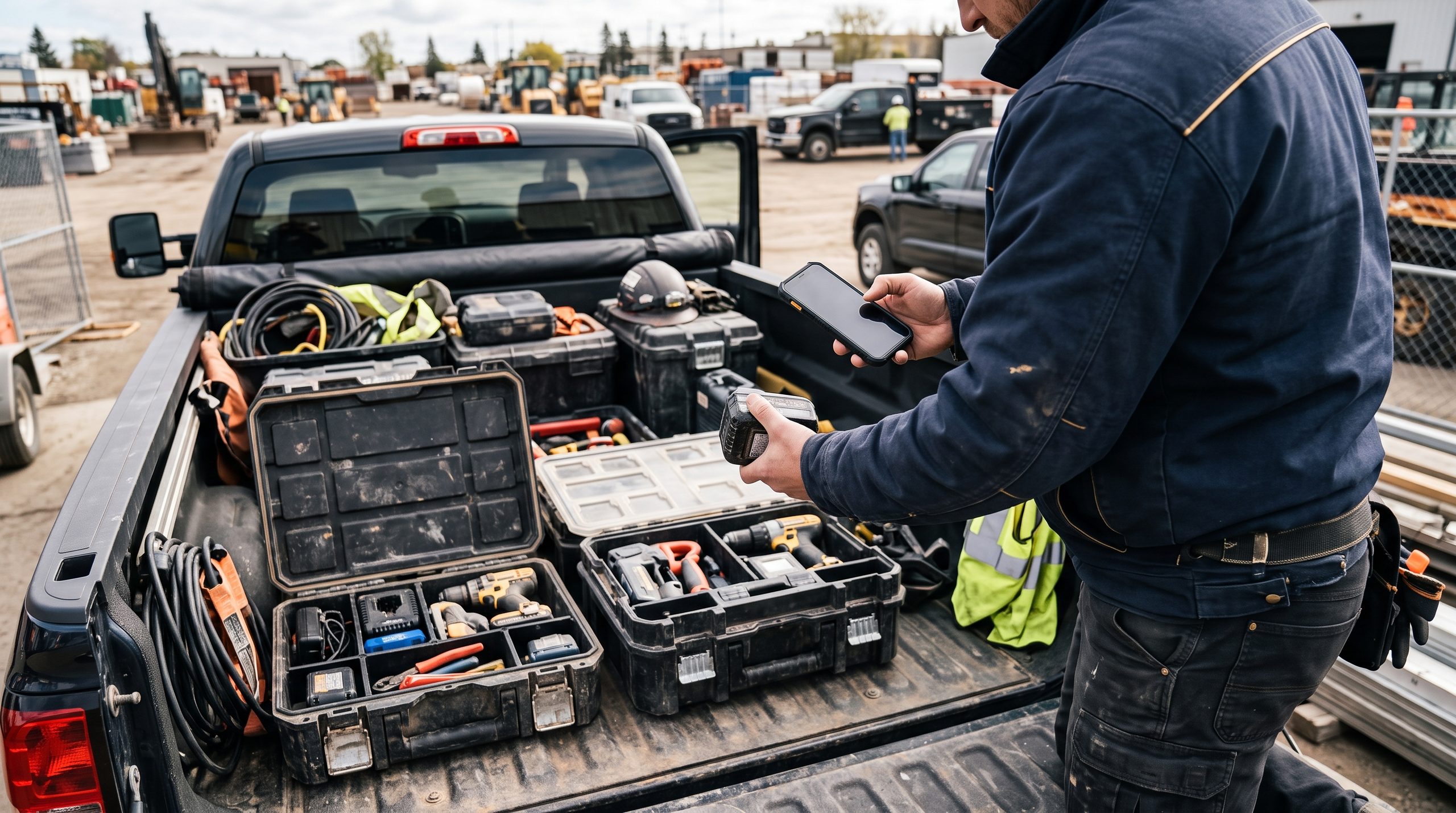
Equipment tracking software is often marketed toward larger operations managing extensive fleets of vehicles and heavy machinery, which can make it seem irrelevant for a small contracting business with a more modest set of tools and equipment. In practice, the underlying problems equipment tracking software solves — lost tools, unclear equipment location, missed maintenance — hit small businesses too, just at a smaller scale.
A quick note: whether equipment tracking software is worth adopting depends heavily on how much equipment a business owns and how often equipment-related problems actually crop up.
What Equipment Tracking Software Actually Does
At a basic level, equipment tracking software helps a business keep track of what equipment and tools it owns, where each item currently sits, who has it, and sometimes its maintenance history and schedule. Some platforms use physical tags or GPS trackers attached to equipment for automated location tracking, while simpler systems rely on manual check-in and check-out logging.
Common Equipment-Related Problems for Small Contractors
Lost or Misplaced Tools
Tools left at a job site, accidentally taken by a crew member to the wrong location, or simply misplaced represent a real, recurring cost for a lot of small contracting businesses, even if each individual loss feels minor in the moment.
Unclear Equipment Availability
Without a clear system, it’s easy to be uncertain whether a specific piece of equipment is available, already in use at another job, or in need of maintenance, which can cause delays or duplicate equipment purchases that wouldn’t be necessary with better visibility.
Missed Maintenance
Equipment that isn’t tracked systematically can go without needed maintenance longer than it should, raising the risk of breakdowns at inconvenient times or shortening the equipment’s overall useful life.
Disputes About Equipment Responsibility
If equipment goes missing or gets damaged, without a clear record of who had it last, it can be hard to figure out what happened or address the issue constructively with the team.
When Equipment Tracking Software Genuinely Makes Sense for a Small Business
A Meaningful Amount of Equipment
Even a small business with a moderate collection of power tools, specialized equipment, and maybe a vehicle or two can benefit from basic tracking, particularly once that inventory represents a significant investment worth protecting.
Equipment Shared Across Multiple Job Sites
If equipment regularly moves between different active job sites, tracking becomes considerably more valuable for keeping visibility into where everything currently is and preventing the confusion that comes from equipment needed at one site actually being somewhere else.
A Growing Crew
As crew size grows, informal tracking through memory or verbal communication gets less reliable, since more people are handling equipment without necessarily communicating its location or status consistently to everyone else.
Recurring Equipment Loss or Damage
If a business has been through a pattern of lost tools, unexpected equipment breakdowns, or disputes about equipment responsibility, that’s a fairly clear signal that better tracking would likely address a real, ongoing cost.
When It Might Not Be Necessary Yet
For a very small operation — a solo contractor or two-person crew with a modest, well-known set of tools used at one job site at a time — the overhead of dedicated equipment tracking software may not be worth it yet. Simple, informal tracking through memory or a basic checklist can work adequately at this scale, at least until the business grows or equipment problems start becoming a recurring issue.
Simpler Alternatives Before Committing to Dedicated Software
Before adopting dedicated equipment tracking software, some small businesses find that simpler steps — a basic shared spreadsheet noting equipment location, or folding equipment status into existing daily logs — provide enough improvement without the cost or complexity of dedicated software. This can serve as a reasonable middle step, and a useful way to confirm whether more equipment tracking in general would genuinely help before investing in specialized software.
What to Look for If Adopting Equipment Tracking Software
For a small business, a genuinely useful platform typically offers simple check-in and check-out logging, basic maintenance scheduling and reminders, and enough mobile usability that crew members can quickly log equipment status directly from the job site without much added effort.
Frequently Asked Questions
Does equipment tracking software require physical tags or GPS trackers on every tool? Not necessarily. Many platforms support simpler manual check-in and check-out logging without requiring physical tracking devices, which can be a reasonable starting point for a smaller business.
How much equipment loss or damage typically justifies the cost of tracking software? There’s no fixed threshold, but if recurring equipment issues are costing a meaningful amount in replacement costs, delays, or wasted time, that cost is worth comparing directly against the price of a tracking solution.
Can equipment tracking be added to an existing field management platform rather than adopted separately? Often yes. Many broader field management or construction management platforms include basic equipment tracking as a built-in feature, which may be worth checking before adopting a separate, dedicated tool.
In Summary
Equipment tracking software isn’t only relevant for large fleets — small contractors dealing with a meaningful amount of equipment, multiple job sites, a growing crew, or recurring equipment loss and disputes can genuinely benefit from more structured tracking. For a very small, simple operation, informal tracking may still be adequate, at least until the business grows or equipment-related problems start showing up consistently enough to represent a real, recurring cost worth addressing directly.