
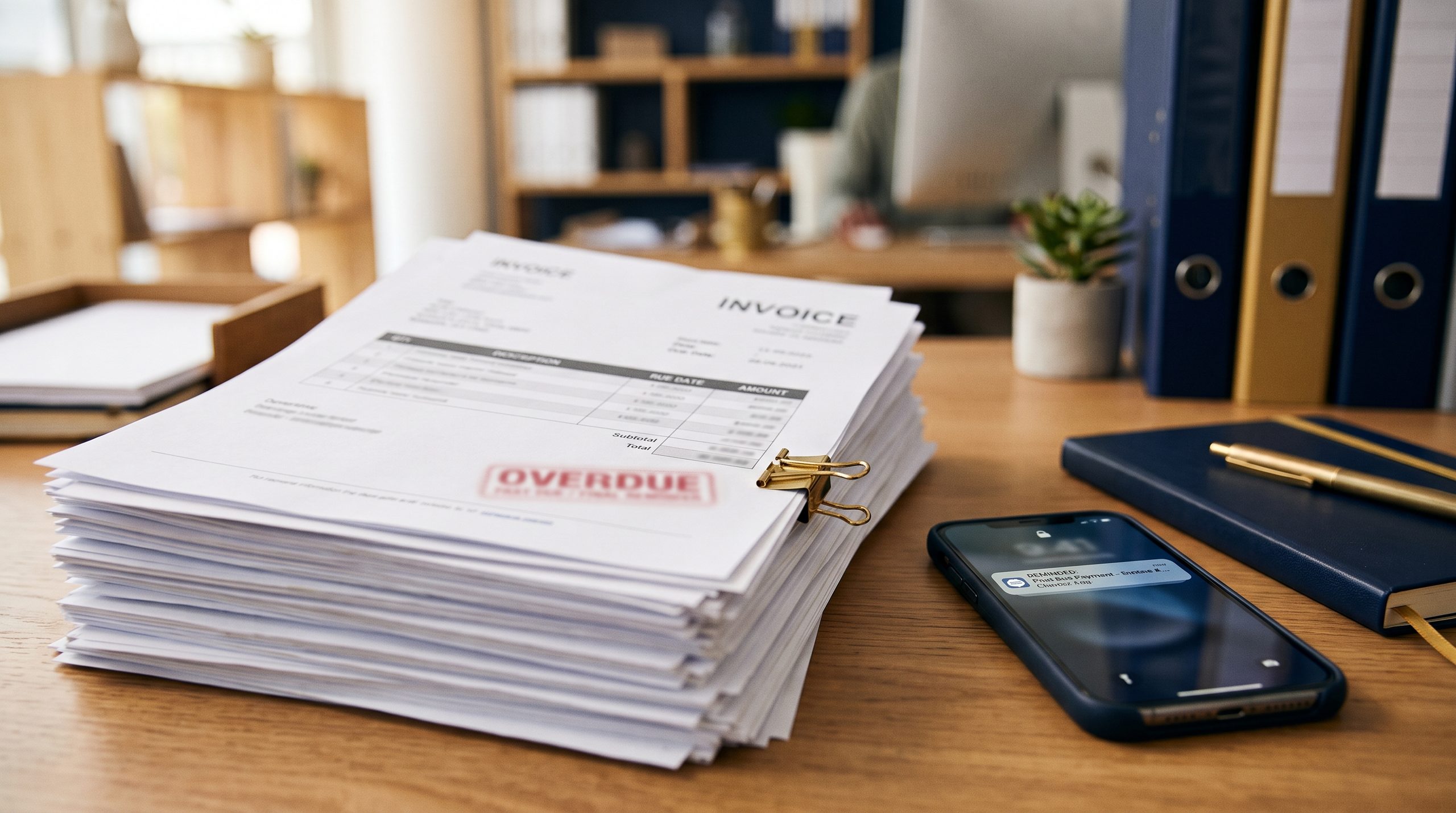
Slow-paying clients get a lot of the blame when a contractor’s cash flow gets tight, but it’s worth looking honestly at whether the invoicing process itself is part of the delay. A handful of common, easy-to-overlook mistakes in how invoices get created and sent can tack on days or even weeks to how long it takes to actually get paid, regardless of how reliable a given client generally is.
A quick note: some payment delays genuinely come down to client behavior or cash flow issues on their end. These mistakes are about the invoicing process specifically, not a claim that every delay is the contractor’s fault.
Sending Invoices Late
If invoices go out days or weeks after work’s completed, that delay gets added directly onto however long the client then takes to actually pay. Sending an invoice promptly — ideally right when the relevant milestone or job wraps up — cuts this avoidable lag out of the overall payment timeline.
Vague or Incomplete Line Items
An invoice that just says “labor and materials” without a clearer breakdown can prompt a client to ask questions or request clarification before they’re comfortable paying, especially for a larger amount. Giving enough itemized detail for the client to clearly understand what they’re being billed for cuts down the back-and-forth that often delays payment.
Missing or Unclear Payment Terms
If an invoice doesn’t clearly state when payment’s due, what payment methods are accepted, and what happens if payment’s late, clients are more likely to deprioritize it or handle it inconsistently. Clear, consistently stated payment terms on every invoice help set expectations and remove ambiguity that can lead to delay.
Not Following Up on Overdue Invoices
Many contractors send an invoice and then wait passively for payment, with no consistent follow-up process for anything that slips past its due date. A simple, polite follow-up at a set interval after an invoice goes overdue often resolves payment delays that would otherwise drag on simply because nobody prompted the client again.
Inconsistent Invoice Formatting
Invoices that look different every time, or that are handwritten or loosely put together, can come across as less professional and sometimes get deprioritized compared to more clearly organized paperwork from other vendors a client’s also paying. Consistent, professional-looking invoices tend to get processed more smoothly, particularly by clients or companies with formal accounts payable processes.
Not Matching Invoices to the Contract or Change Orders
If an invoice doesn’t clearly reference the original contract or relevant change orders, a client may hold off paying while they verify the billed amount matches what was actually agreed. Referencing the specific contract terms or change order numbers right on the invoice helps the client confirm accuracy quickly, without needing to go back and cross-check separately.
Offering Limited Payment Methods
Requiring payment exclusively by check, for example, can slow things down for clients who’d rather pay electronically. Offering several convenient payment methods, including digital options, tends to cut down the friction that leads some clients to delay simply because their preferred method isn’t available.
Not Requiring a Deposit on Larger Jobs
For larger projects, skipping a deposit before starting work means the contractor’s financing a bigger chunk of the job upfront, and any payment delay at the end hits harder financially. A reasonable deposit structure cuts this exposure and often signals to a client that timely payment’s expected throughout the project, not just at the very end.
How Invoicing Software Helps Address These Patterns
A lot of these mistakes come down to inconsistency — invoices going out at different times, in different formats, with different levels of detail, with no reliable follow-up process. Invoicing software helps by standardizing invoice format and level of detail, automating reminders for overdue invoices, and making it easier to send invoices immediately after finishing a milestone rather than letting the task sit on a to-do list.
Frequently Asked Questions
How soon after finishing a job or milestone should an invoice be sent? As soon as reasonably possible, ideally the same day or within a day or two. Delays in sending the invoice directly add to how long it ultimately takes to get paid.
Is it appropriate to charge a late fee for overdue invoices? Depends on what’s agreed to in the contract. If late fees are going to apply, they should be clearly stated in the payment terms from the start, not introduced after the fact.
Does automating invoice reminders risk annoying good clients? Well-designed reminder systems are typically polite and professional, and most clients understand and expect reasonable follow-up on overdue payments. The bigger risk is usually not following up at all.
In Summary
A meaningful share of payment delays trace back to invoicing habits fully within a contractor’s control — late invoices, vague line items, unclear payment terms, and inconsistent follow-up on overdue amounts. Addressing these specific patterns, often with the help of invoicing software that standardizes formatting and automates reminders, tends to noticeably speed up how quickly a business actually gets paid, independent of any individual client’s payment habits.