
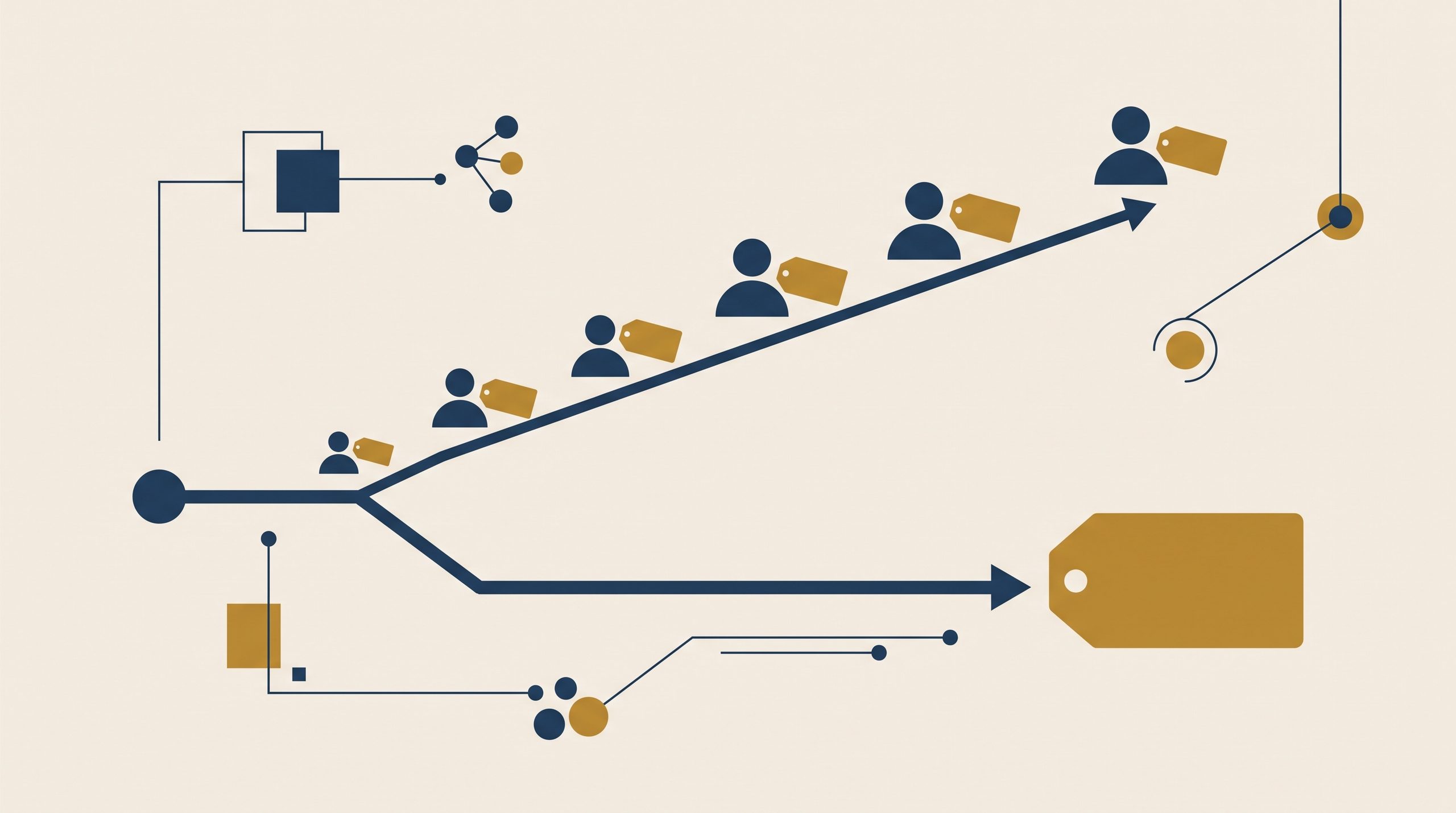
Two software platforms can offer nearly identical features and still end up costing a business very different amounts, simply because of how they structure pricing. Per-user and flat-rate models are the two most common approaches in construction software, and understanding the real difference between them matters more than comparing headline monthly prices alone.
A quick note: neither model is universally better. The right choice depends on your current team size, growth plans, and how many people actually need direct access to the software.
How Per-User Pricing Works
Per-user pricing charges a set amount for each person who logs into the platform, commonly somewhere in the range of $20 to $150 per user per month depending on the provider and feature tier. The total cost scales directly with headcount: adding a new office employee, field crew member, or subcontractor with direct access bumps up the monthly bill.
Where Per-User Pricing Makes Sense
This model tends to work well for a very small, stable team that isn’t planning to grow its user count much in the near future. It also lets a business start small and pay only for the access it actually needs at a given moment, without committing to a bigger flat fee upfront.
Where Per-User Pricing Gets Expensive
The cost can climb fast once a business starts adding office staff, an expanding field crew, and subcontractors who need visibility into the schedule. A team that starts out with three users at a reasonable monthly rate can find the total considerably higher within a year or two of steady growth, even if the per-user rate itself never changes.
How Flat-Rate Pricing Works
Flat-rate pricing charges one fee for the entire company, no matter how many people get added, often up to a certain cap on total users or active projects. That creates a more predictable monthly cost that doesn’t shift every time a business hires or brings on a new subcontractor.
Where Flat-Rate Pricing Makes Sense
This model tends to appeal specifically to growing businesses, since it breaks the direct link between headcount and software cost. It also tends to encourage broader adoption across a team, since there’s no added cost to giving field crew members or subcontractors direct access to the schedule.
Where Flat-Rate Pricing Can Be Less Ideal
For a very small, single-user or two-user operation, a flat-rate plan can sometimes cost more than a comparable per-user plan would for that same small number of people, since the flat fee is often set with a somewhat bigger team in mind.
A Practical Way to Compare the Two
Rather than comparing the advertised starting price of a per-user plan directly against a flat-rate plan, it helps to work out the actual monthly cost under each model using your real current team size, and then again using a realistic projection of team size a year or two out. That comparison often reveals that a per-user plan looks cheaper today but would cost meaningfully more than a flat-rate alternative once realistic growth is factored in, or the reverse for a business that isn’t planning to grow its user count much at all.
Other Factors Beyond the Headline Pricing Model
Subcontractor Access
If a business regularly wants subcontractors to have direct visibility into the schedule, per-user pricing can get pricey fast, since each subcontractor added counts toward the total. Flat-rate pricing tends to make this kind of broader access more financially practical.
Feature Parity Between Models
Worth checking whether a flat-rate plan includes the same features as a comparable per-user plan, or whether flat-rate options are sometimes positioned with fewer advanced features. Pricing model and feature depth don’t always move together in a predictable way.
Growth Trajectory
A business confident it’ll stay small for the foreseeable future has less to gain from flat-rate predictability than a business actively planning to grow its crew and add subcontractors over the next year or two.
Frequently Asked Questions
Is flat-rate pricing always cheaper in the long run? Not always. It depends on how many users a business realistically needs. A very small, stable team can sometimes pay less under a well-priced per-user model.
Can a business switch pricing models later if needs change? Sometimes, either by switching plans within the same provider or by switching to a different platform entirely, though switching providers brings its own transition costs worth factoring in.
Does per-user pricing ever include unlimited features per user? Varies by provider. Some per-user plans include full feature access per seat, while others still gate certain features behind higher tiers regardless of the per-user pricing structure.
In Summary
Per-user and flat-rate pricing lead to meaningfully different costs depending on a business’s team size and growth trajectory, more than they differ in the features offered. Per-user pricing tends to suit a small, stable team well, while flat-rate pricing often becomes more cost-effective and encourages broader team adoption as a business grows. Working out real costs under both models, using both current and projected team size, gives a much clearer answer than comparing advertised starting prices alone.